Bridging Secure Cloud environments
Sling Ring
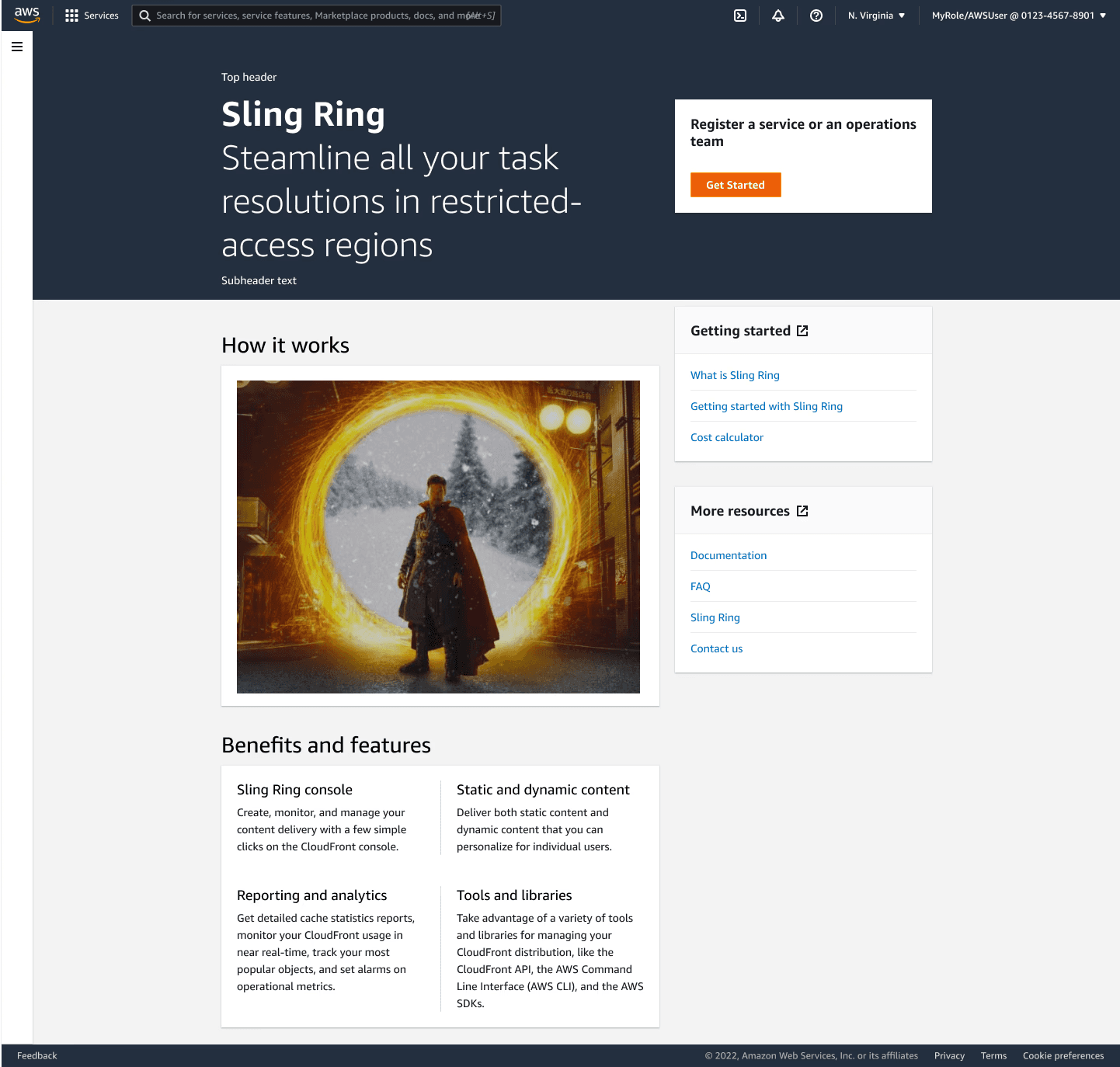
Before we begin, what is a Sling Ring? Why the Doctor Strange image on the products info page? Short story – Dr. Strange uses Sling Rings to create a portal between worlds. How does this matter to AWS? Continue reading to find out!
Sling Ring aims to enhance operational efficiency in restricted-access environments by implementing a unified interface that enables seamless collaboration between cleared engineers, service owners, and leadership teams. The solution will streamline task management through clear instruction delivery, elimination of ad hoc commands, and flexible work allocation between restricted and non-restricted zones, ultimately optimizing workflow in security-sensitive areas.
I worked with a team of product managers and engineers as the UX designer to alleviate a critical business challenge where AWS service deployments in restricted-access regions were experiencing significant delays. Data showed 23% of project time was lost due to engineer unavailability, and 8% due to poor communication. This impacted AWS's ability to scale cloud services in secure environments.
Problem Analysis & Synthesis
Working with existing research data and stakeholder insights, I analyzed the key pain points in task management between service and cleared engineers. I synthesized these findings to identify critical design opportunities that would improve workflow efficiency and communication between restricted and non-restricted teams.
Persona Creation
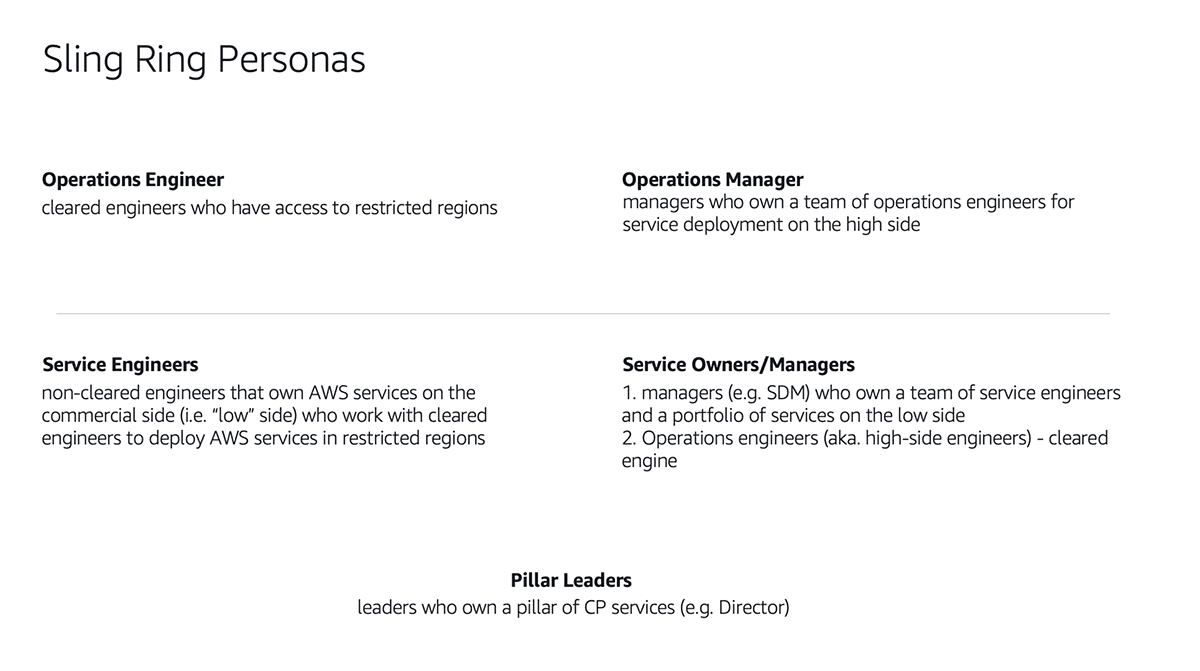
Building upon extensive user research previously conducted by the team, I collaborated with the product team to analyze and map comprehensive user flows around five key personas (Service Owner, Service Engineer, Cleared Engineer, Operations Manager, and Security Validator) to understand their distinct needs within the Amazon Dedicated Cloud system. These personas were developed based on insights gathered from stakeholder interviews and workflow analysis, which helped identify distinct user patterns, responsibilities, and security clearance requirements across different roles in the organization.
User Journey Mapping
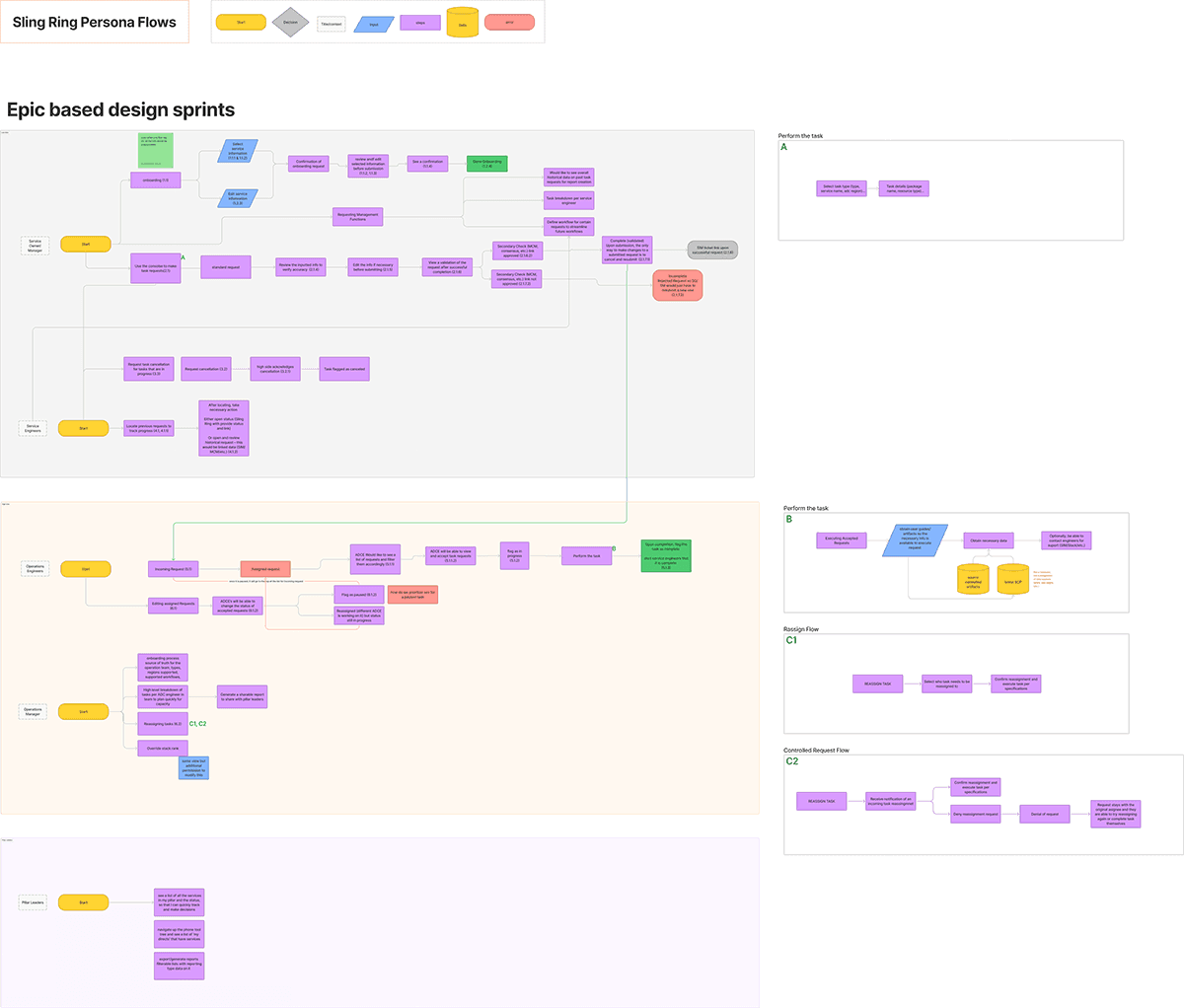
The experience was structured around 10 distinct epics that progressed from basic onboarding flows to complex multi-stakeholder scenarios, with each epic representing a comprehensive user journey within Amazon Dedicated Cloud, starting with fundamental processes and evolving to address sophisticated workflows such as cross-team collaborations, emergency protocols, and advanced security clearance processes. This structured approach helped identify critical interaction points between teams with different security clearances, enabling us to design seamless handoffs and clear communication channels, while revealing opportunities to streamline workflows and reduce friction points, particularly in scenarios requiring collaboration between cleared and non-cleared personnel.
Interface Design & Prototyping
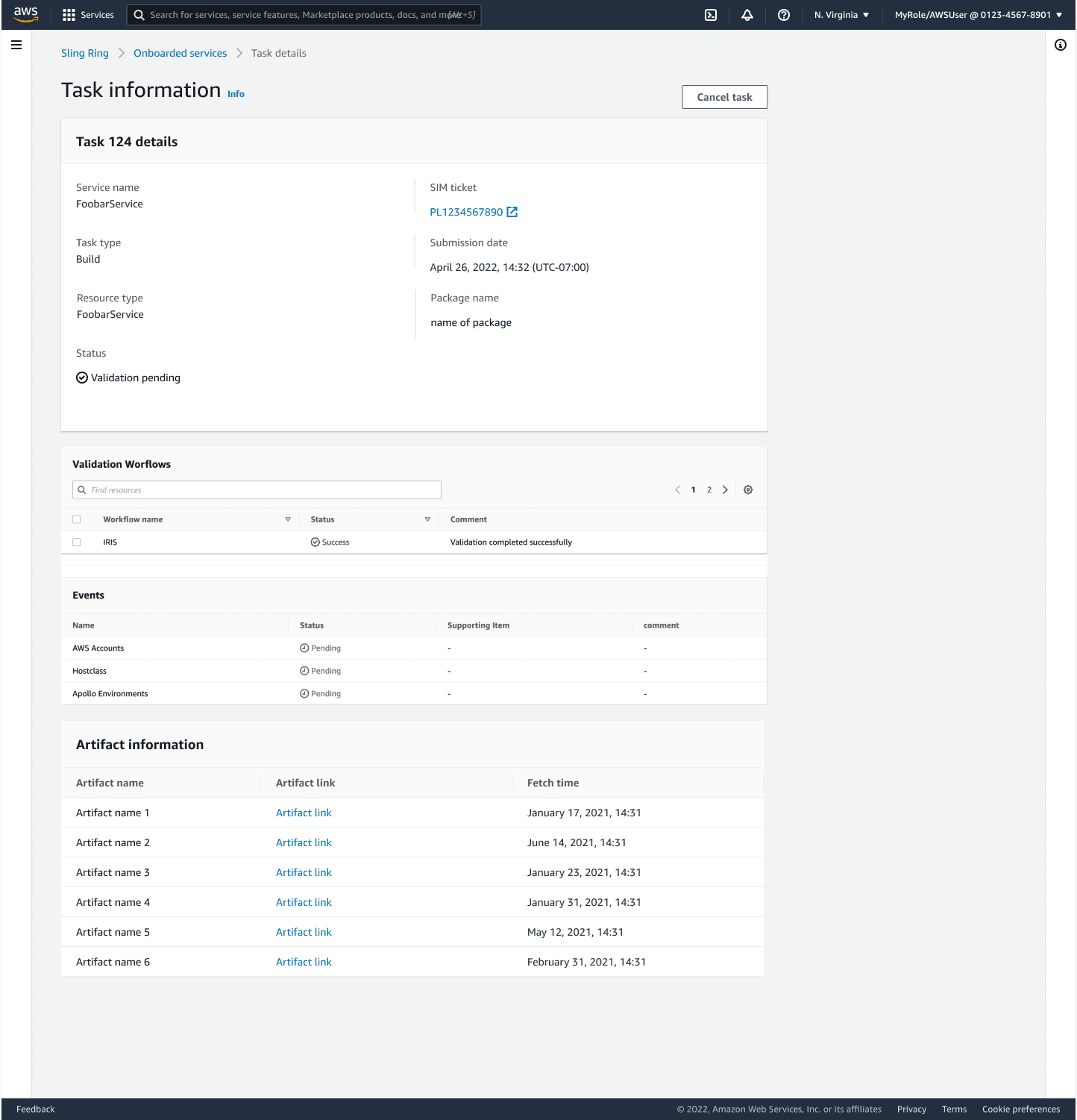
As the sole UX designer, I created comprehensive wireframes and high-fidelity designs for the Sling Ring console and dashboard interfaces. I developed a systematic design approach that standardized task submission processes while ensuring clear status visibility and action items for all user types.
Usability Testing & Refinement
I conducted usability testing sessions with both service and cleared engineers to validate the design solutions and understand their daily use cases. Through iterative feedback and refinement, I optimized the interface to better align with user workflows and ensure the solution effectively bridged the communication gap between teams.
A critical strategic decision I made during the Sling Ring project was to consolidate the platform's architecture to a single entry point, rather than maintaining the dual-entry system originally proposed in the Business Requirements Document (BRD). The initial design called for separate entry points for service and cleared sides, but I recognized this would introduce unnecessary complexity and potential maintenance challenges.
Through analysis existing internal tool patterns and best practices, I proposed and implemented the design of a unified entry point with intelligent routing based on use cases and input parameters. This strategic decision proved successful not only from a design standpoint but also for the engineering team's operational efficiency, delivering multiple benefits including reduced architectural complexity, streamlined maintenance workflows, enhanced user experience through a unified interface, and improved system reliability that simplified the team's troubleshooting processes.
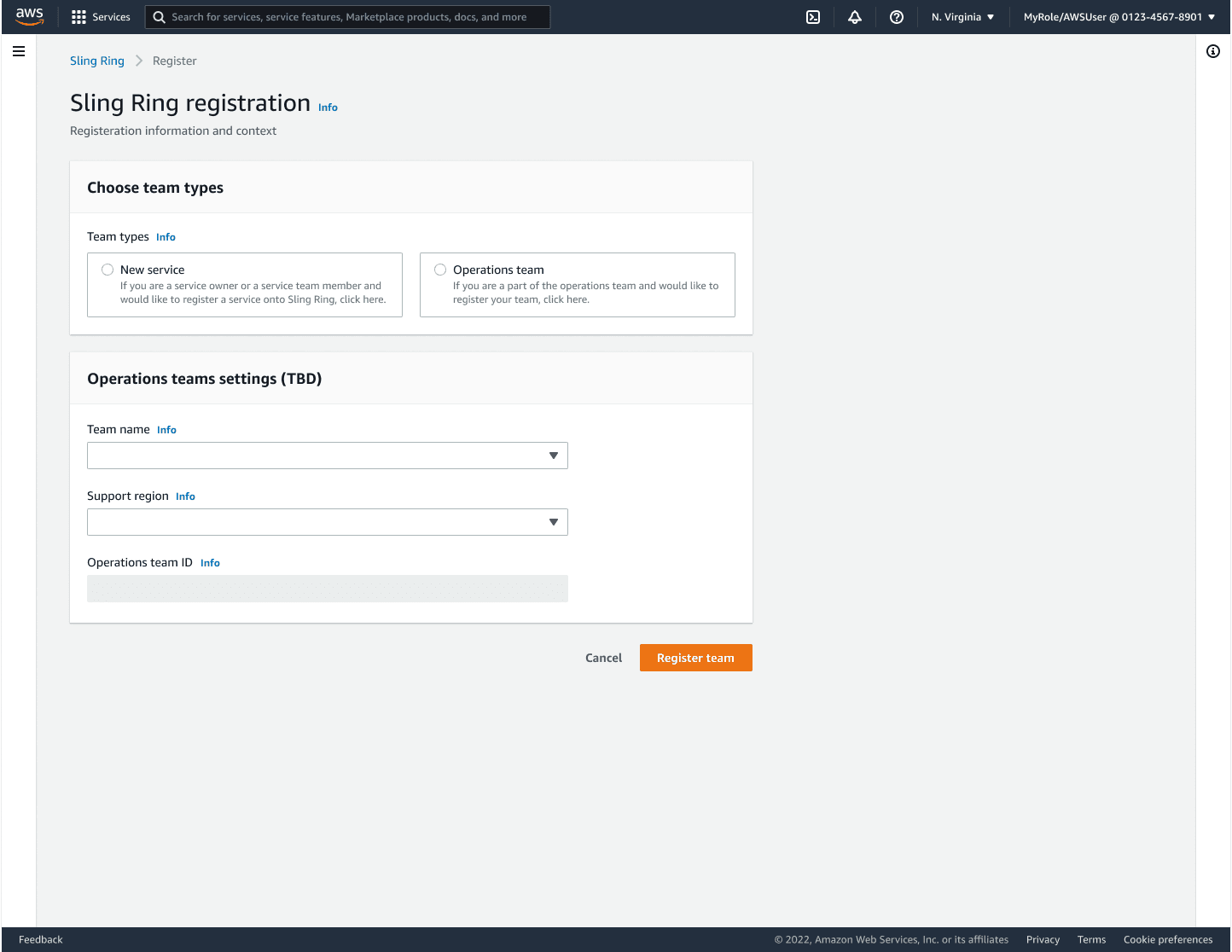
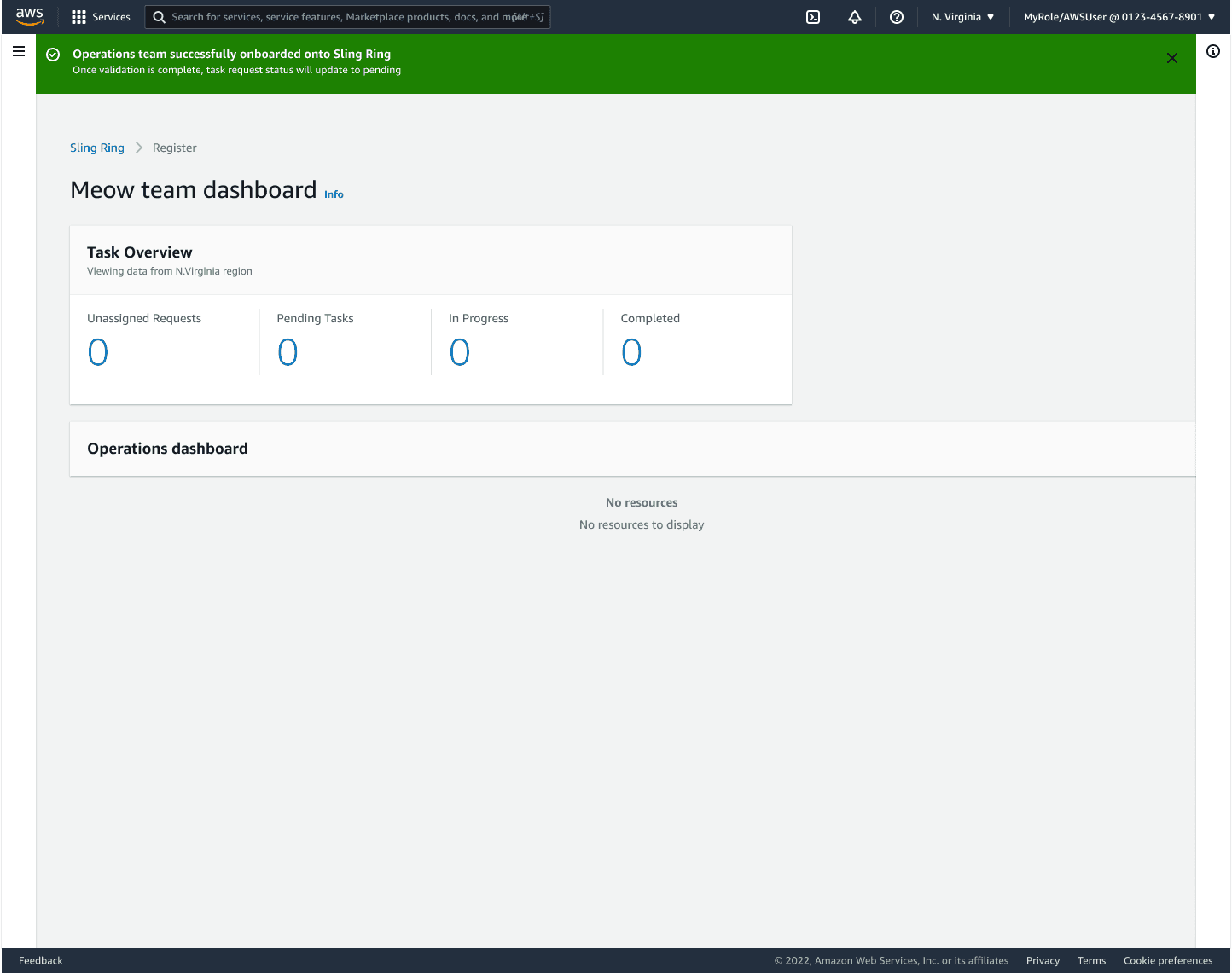
Sling Ring Single entry Registration
The centralized entry point serves as a unified gateway where all team members access Sling Ring's comprehensive task management capabilities, ensuring consistent workflows and streamlined operations across the platform.
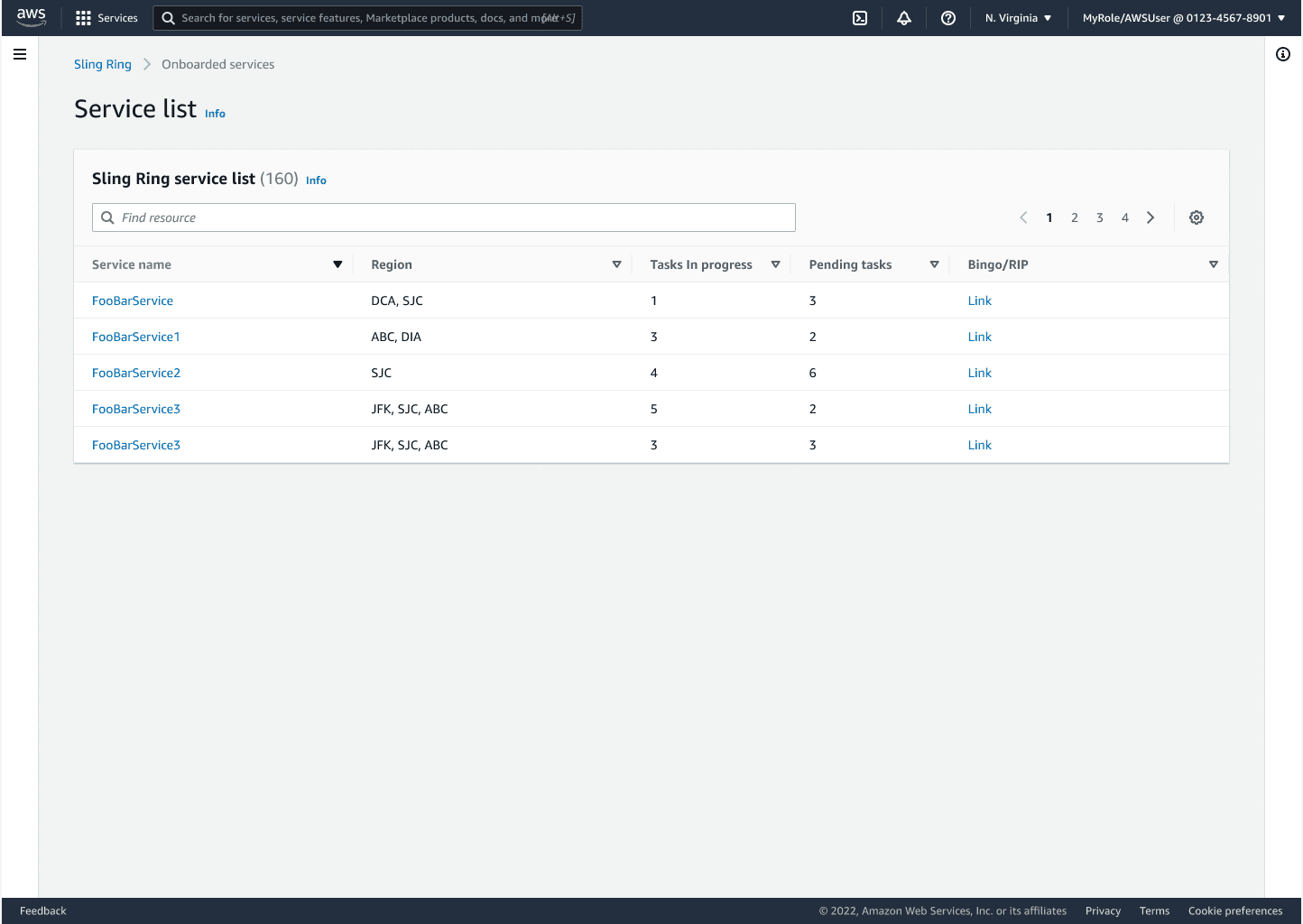
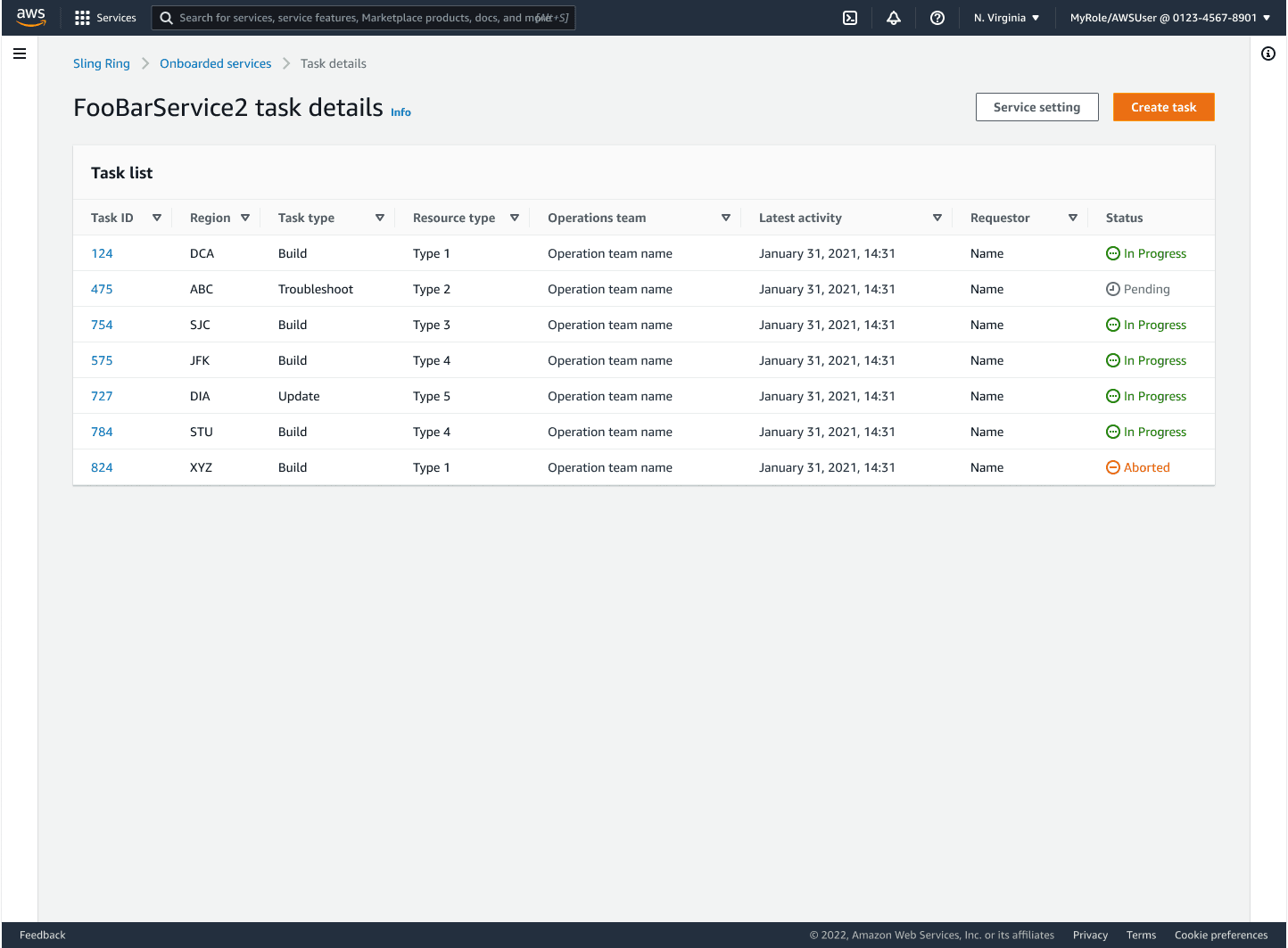
At its core, Sling Ring revolutionized task management by implementing a unified interface that replaced previously fragmented communication channels like Slack and SIM. The platform established standardized workflows for task requests between restricted and non-restricted environments, while creating robust tracking mechanisms for cross-boundary work assignments. This centralization proved fundamental in improving operational visibility and control.
The platform significantly enhanced operational efficiency through multiple sophisticated features. By developing flexible work assignment capabilities, we reduced rigid engineer dependencies that had previously caused delays. The system introduced rigorous quality control measures for artifacts and documentation, while implementing validated command execution protocols to replace potentially risky ad-hoc commands. These improvements directly addressed previous operational inefficiencies, resulting in an approximate 31% reduction in task resolution delays.
Security and standardization were paramount in the platform's design. Sling Ring introduced structured templates for common task requests and established secure methods for sharing code resources across security boundaries. The platform maintains standardized operating procedures with version control and integrates validation checks for all command executions in restricted regions, ensuring both efficiency and security compliance.
To address future scalability needs, the platform was architected with growth in mind. The system supports increasing cloud service demands in restricted regions and provides a solid foundation for future automation capabilities. Its flexible routing mechanisms for task assignments and ability to enable parallel processing of tasks (where security protocols permit) ensure the platform can scale with organizational needs.
The platform's comprehensive progress tracking and visibility features provide unprecedented insight into cross-boundary operations. Through detailed dashboards for task status monitoring and metrics tracking for resolution times and resource utilization, Sling Ring enables clear communication between service owners and cleared engineers while providing leadership with valuable visibility into cross-boundary operations.
This comprehensive solution directly addresses key business challenges while establishing a robust framework for future automation and scaling capabilities in restricted-access environments. The platform's success in streamlining complex cross-boundary workflows demonstrates its strategic value in enhancing operational efficiency and security compliance.
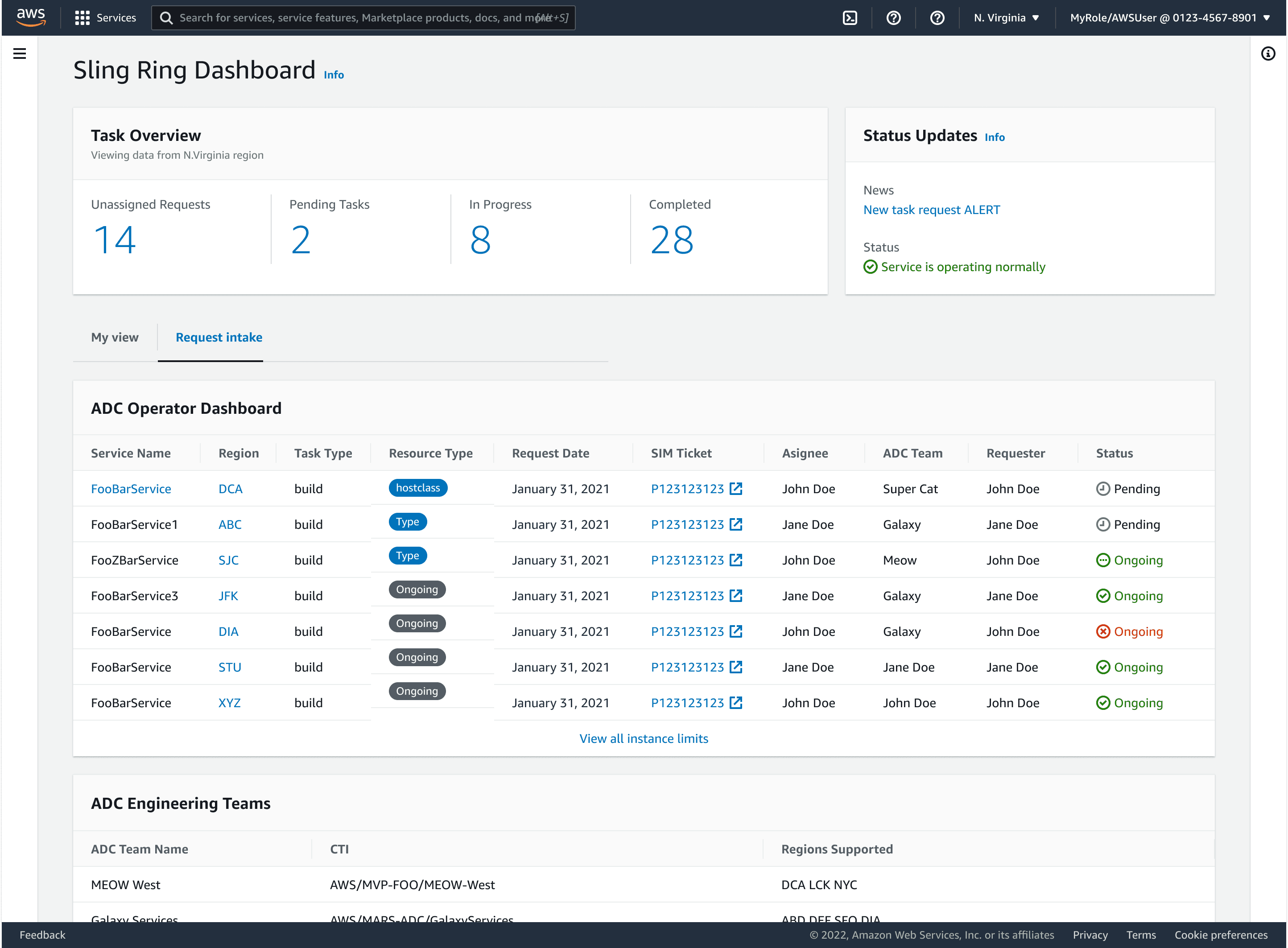
Sling Ring Dashboard
The final design for the Sling Ring dashboard for a cleared engineer that includes a general overview, status updates, a customizable table view, task intake list, and a list of engineering teams.
Efficiency Gains
- Eliminated the 31% time loss in deployment cycles
- Enabled flexible work assignment between restricted and non-restricted teams
- Standardized resource sharing and task management
Risk Reduction
- Removed ad hoc code commands
- Implemented quality control for artifacts
- Standardized operational procedures
Scalability Achievement
- Successfully launched pilot in Q2 2023
- Reached Internal Availability in August 2023
- Planned General Availability in Q1 2025, including advanced features like automated routing
Since its initial deployment in December 2022, Sling Ring has demonstrated remarkable success as a live product operating in three restricted regions as a pilot program. The solution has dramatically improved operational efficiency by eliminating 31% of time previously lost in deployment cycles. This improvement directly addresses the historical challenges, where 23% of time was lost due to engineer unavailability and 8% due to communication issues.
By providing a centralized interface for task management and standardized workflows between service owners and cleared engineers, Sling Ring has streamlined operations in restricted-access regions while maintaining necessary security protocols.